



Good MDF guidelines answer six questions before a partner spends a dollar: who qualifies, what the money can buy, how to get approval, what proof to submit, when the money expires and what happens if the rules are broken. Vendors that publish these rules in one place avoid most disputes. The examples below come from the published programs of Pega, GitLab, MongoDB, Ruckus and SonicWall, so you can see where real programs land on each point.
TL;DR
- Define eligibility, eligible activities, approval steps, claim deadlines, expiration and consequences in writing, in one document partners can find.
- Require approval before the activity. Published programs ask for it in writing, and Ruckus wants requests at least five business days ahead.
- Claim windows in the programs we reviewed run from 30 to 90 days after the activity ends. Pick one, state it plainly and apply it the same way every time.
- Tie every request to KPIs so you can judge results, not just receipts.
- Guidelines only work if someone can enforce them. Track requests, approvals and claims in one system, not across email threads and spreadsheets.
Table of Contents
- What MDF guidelines need to cover
- Eligibility and allocation rules
- Eligible and excluded activities
- The request, approval and claim workflow
- Claim deadlines and MDF expiration policy
- Measuring performance and enforcing the rules
- Why clear guidelines benefit vendors and partners
- Our perspective: guidelines are only as good as the system behind them
- Put your guidelines to work in GearBox®
- A quick checklist before you publish
- FAQ
- Sources
What MDF guidelines need to cover
Market development funds (MDF) are money a vendor sets aside to help channel partners market and sell its products. Pega’s partner guide describes MDF as a proposal-based investment meant to help partners build and grow the vendor’s business through seller training and certification, complementary offerings and demand-generation campaigns. If you want the basics first, our guide on what MDF is covers the definition and how it differs from co-op.
Guidelines turn that definition into rules a partner can follow without calling anyone. A complete set has seven parts:
- Purpose and funding source. What the fund is for and who owns the budget.
- Eligibility and allocation. Which partners qualify and how much each can receive.
- Eligible and excluded activities. What the money can pay for.
- Request and approval process. What to submit, to whom and how far ahead.
- Claims and documentation. What proof is required and by when.
- Expiration. When unused funds go away and whether extensions exist.
- Measurement and compliance. The KPIs, audits and consequences.
Ambiguity is the enemy. One industry perspective notes that vague rules on partner tiers and claim deadlines create disputes later. Every section below is about removing that ambiguity.
Eligibility and allocation rules
Eligibility is program-specific, so write yours around your own channel structure. In Pega’s 2022 guide, MDF was open to partners in good standing with an Authorized, Specialized, Global Elite or Government Elite distinction. Allocations were not a flat share. They came from a proposal that reviewed strategic alignment, target market, activities, milestones, partner investment, requested amount and KPIs. Pega also reserved discretion to approve, partially approve or reject any request.
Three choices belong in your guidelines:
- The entry bar. Tier, certification, sales volume or good standing. Pick measurable criteria and name them.
- The allocation method. Fixed percentage of sales, tier-based pool, or proposal-based awards. Say which one, and say whether funds are use-it-or-lose-it.
- Vendor discretion. If you keep the right to approve partially or reject, say so. Partners respect a clear rule more than a surprise denial.
The same logic applies whether you sell software through resellers or building products through distributors. Industry details change the activities and the paperwork, not the need for a clear entry bar. Our market development funds by industry guide shows how the structure shifts across manufacturing, building products, franchise, insurance and finance.
Eligible and excluded activities
Partners need a concrete list. Vague phrases like “marketing activities” invite requests you did not intend to fund.
GitLab’s channel guide is a useful model. Its MDF may support demand-generation activities such as seminars, workshops, telemarketing or email campaigns, tradeshows, exhibitions and direct mail. Eligible costs can include venue costs, lead capture, marketing materials and speakers’ fees. Food and beverages are eligible, except alcoholic beverages.
Notice the structure: a list of activity types, a list of cost types, and one explicit exclusion. Your guidelines should do the same.
| Element | What to write down | Example from a published program |
|---|---|---|
| Activity types | The campaign formats you will fund | Seminars, workshops, email, tradeshows, direct mail (GitLab) |
| Cost types | Which expenses count | Venue, lead capture, materials, speakers (GitLab) |
| Exclusions | What never qualifies | Alcoholic beverages (GitLab) |
| Funding share | How much of an activity you cover | Up to 50% of an approved event, up to 100% of vendor-run events with pre-approval (MongoDB) |
On funding share, MongoDB’s terms cover up to 50% of an approved event’s cost and may cover up to 100% of MongoDB events with pre-approval. A co-investment rule like this keeps partners invested in results. It also gives you a simple way to test commitment before you release funds. Advisors on MDF design often add that vendors should check whether a partner is committed to selling and has a trained team before investing.
If your brand also runs co-op, state how the two funds differ so partners do not submit one request against the wrong pool. Our MDF marketing funds article explains how to run partner campaigns with control and visibility.
The request, approval and claim workflow
The published programs agree on the order of events: approval first, activity second, proof third. Write it as numbered steps so nobody can claim they missed it.
- Submit a request before the activity. Pega requires written pre-approval for reimbursed activities. Ruckus asks for requests in its MDF tool at least five business days before the activity, and approval must come before the partner commits to or engages in it.
- Include the plan. Objective, audience, activities, milestones, partner investment, amount requested and KPIs. Pega’s proposal review looks at exactly these items.
- Wait for formal approval. Say who approves, how long review takes and how the partner is told.
- Run the activity as approved. State what happens if scope changes.
- Submit the claim with proof of performance. Pega asks for receipts and reviews claims, and it may reject incomplete or mismatched documentation. MongoDB asks for claims with receipts through its online portal.
- Review and pay. Say whether payment is reimbursement, advance or staged.
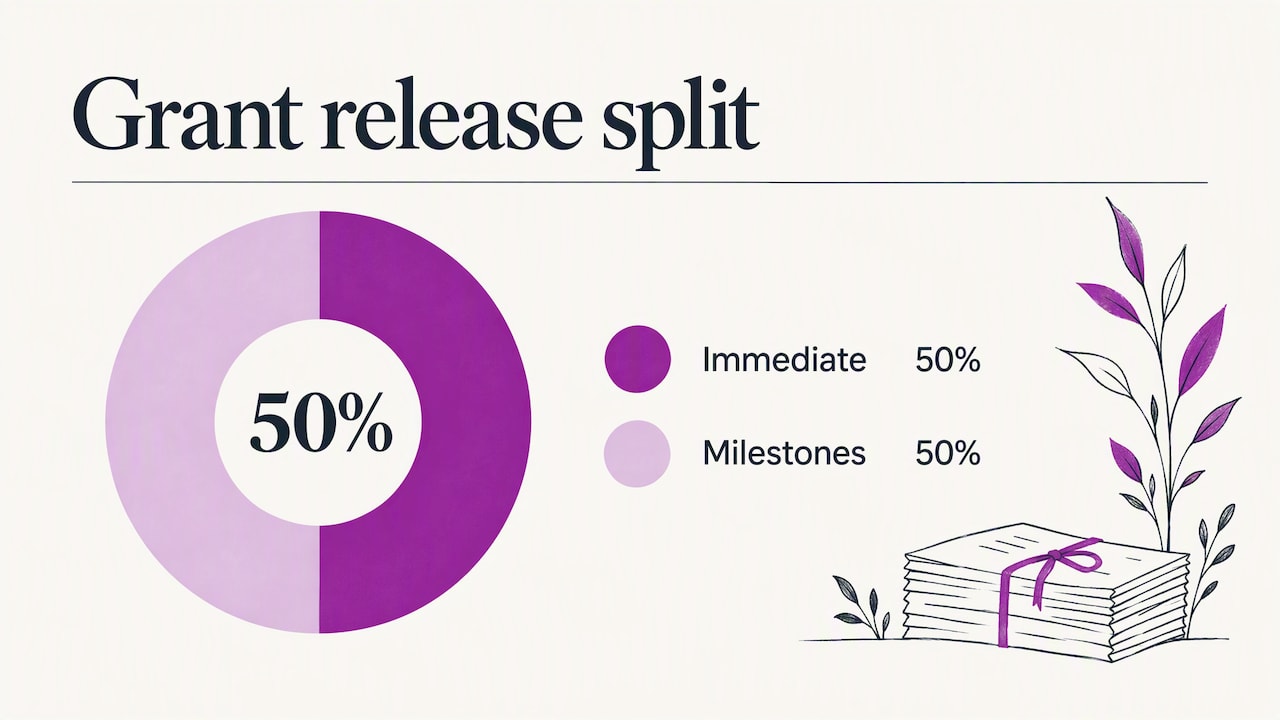
Payment timing is a design choice worth stating. Pega makes 50% of the granted amount available for immediate implementation and releases the remaining 50% when the partner meets scheduled plan milestones. Staged release protects the budget without making a partner float the entire cost.
Documentation rules deserve their own paragraph in your guidelines. List the exact proof for each activity type: invoices, proof of payment, screenshots, attendee lists, creative samples. Then say you may audit claims. Clear documentation standards at both request and claim stage make approvals move faster.
The heavy lifting here is administrative. Our piece on MDF fund management covers how to run this workflow without drowning your channel team in follow-ups.
Claim deadlines and MDF expiration policy
Expiration is where partners get burned and vendors get complaints. The programs we reviewed set very different windows, which shows there is no single correct number. What matters is that yours is explicit.
| Program | Rule | Source |
|---|---|---|
| MongoDB | Claims with receipts within 30 days of the event date | Partner terms |
| Ruckus (program overview) | Claims within 45 days of the activity end date; after that the approval expires and the activity is no longer funded | Program guidelines |
| Ruckus (2018 guide) | Funds available through the activity end date plus 60 days; claims and proof must be audited and approved before expiration | MDF guide |
| SonicWall | Claims within 90 days of the activity end date; afterward the fund request is closed | MDF program guide |
The two Ruckus entries come from separate documents, and the gap between them is a good lesson. If a program publishes more than one version of its rules, partners will quote whichever one helps them. Keep one current document and retire the old ones.
When you write your own expiration policy, answer these questions:
- What starts the clock? The activity end date is the most common anchor in the examples above.
- How long is the claim window? Shorter windows cut accruals and reconcile faster. Longer windows suit multi-month campaigns.
- Does approved but unclaimed money return to the pool? The programs above close or expire the request, so say what happens to the dollars.
- Are extensions possible? If yes, who grants them, how must partners ask and by when? If no, say “no extensions” outright.
- What about unused annual allocations? State whether they roll over or reset on a specific date each program year.
For a deeper look at fund tracking across a program year, see our advanced MDF management page.
Measuring performance and enforcing the rules
Rules without consequences are suggestions. Pega requires requests to include KPIs and expects the stated outcomes to align with those KPIs. It may rescind MDF participation for failures including noncompliance with program, financial or contract terms, and partners who fail to comply during their plan lose eligibility to receive funds.
You can borrow that structure:
- Set KPIs at request time. Pipeline created, leads captured, certifications completed, attendance, or revenue influenced. Pick what fits the activity.
- Compare plan to result at claim time. Treat the claim as a mini-report, not just a receipt.
- Write down the consequences. Reduced future allocation, paused eligibility or full loss of funds. Partners accept consequences they saw in advance.
- Audit a sample. Say that you may request additional documentation and then do it, consistently.
Measurement also feeds next year’s allocations. Partners that consistently convert funds into pipeline earn a bigger share, and underperformers get coaching or less budget. That loop is hard to run if requests live in one inbox and results in another. Our article on MDF sales programs looks at connecting funds to sales outcomes.
Why clear guidelines benefit vendors and partners
For vendors, written guidelines mean predictable spend, fewer exceptions and cleaner reporting. For partners, they mean knowing what is fundable before they invest time in a proposal, which raises the quality of requests you receive. One industry view holds that MDF lets manufacturers expand market reach while partners accelerate revenue growth and limit their financial exposure.
Those benefits compound when your MDF activity fits a wider plan. Partner campaigns that coordinate email, events, social and paid media tend to perform better than isolated tactics, and resources on cross-channel strategies for growth are a good place to see how channels reinforce each other. Your guidelines can encourage this by asking partners to name the channels in each plan and how they connect.
Our perspective: guidelines are only as good as the system behind them
We have spent more than 20 years helping brands that sell through dealers, distributors, franchisees, agents and advisors, and the pattern is consistent. The guidelines are rarely the problem. The problem is that the rules live in a PDF while the requests, approvals, vendor invoices and proof of performance live in five other places.
That is why we built GearBox® around one login for campaigns, vendors, co-op and MDF dollars, orders and brand assets. Corporate sets the rules once: who qualifies, which activities are approved, what the approval hierarchy looks like. Local partners then get what they need to market and sell, inside those rules, without chasing anyone for an answer.
We have seen what that control can do. SRS Distribution adds more than $2 million a year in co-op fund use across 70+ vendors with our Reverse Co-op Engagement Tool. When partners can see what funds exist and act on them in minutes, fewer dollars expire unused.
Our advice: write the guidelines first, keep them short enough that a partner reads them, and then make the compliant path the easiest path.
Client
Put your guidelines to work in GearBox®
If you manage MDF or co-op across many partners, GearBox® gives corporate teams one place to run funds, approvals, vendor coordination and brand assets, with approval hierarchies and analytics built in. Partners get a single login to request, execute and track their campaigns. It also supports multilingual and multicurrency programs for global channels.
See how it works for your channel at GearBox®, or schedule a demo with our team. Distributors can also explore how our B2B marketplace gives partners one place to find what they need.
A quick checklist before you publish
Read your draft as a partner who has never spoken to your channel manager. Can that person answer each item below from the document alone?
- Am I eligible, and what happens if my status changes mid-year?
- Which activities and costs are covered, and which are excluded?
- What share of the cost will the vendor fund?
- Who approves, and how far ahead must I ask?
- What proof do I submit, and in what format?
- How many days after the activity do I have to claim?
- When does unclaimed money expire, and can I ask for more time?
- What results will be measured, and what happens if I miss them?
Any question that needs a phone call is a gap in the guidelines. Fix it in writing.
FAQ
What should MDF program guidelines include?
At minimum: eligibility, allocation method, eligible and excluded activities, the request and approval process, claim documentation, deadlines, expiration, KPIs and consequences for noncompliance. Published programs from Pega, GitLab and Ruckus all cover these areas. Put them in a single document with one current version.
How long do partners have to submit an MDF claim?
It depends on the program. MongoDB asks for claims within 30 days of the event, Ruckus’s program overview sets 45 days from the activity end date, and SonicWall allows 90 days. Choose a window that fits your campaign lengths and apply it consistently.
When does MDF expire?
The expiration policy is set by each vendor. Ruckus’s 2018 guide keeps funds available through the activity end date plus 60 days, after which remaining funds expire. State your trigger date, your window and whether extensions exist so partners can plan around it.
Does MDF need approval before the activity?
In the programs reviewed, yes. Pega requires written pre-approval for reimbursed activities, and Ruckus requires approval before a partner commits to the activity. Spending first and asking later is the most common reason claims are rejected.
How is MDF different from co-op funds?
MDF is typically proposal-based and aimed at growing demand and building partner capability, as in Pega’s description. Co-op programs usually accrue from partner purchases. Whichever you run, state clearly which fund a request draws from. Our guide to MDF meaning in marketing goes into more detail.
Sources
- Pega Partner Market Development Funds (MDF) Guide, January 2022
- GitLab channel program guide: MDF
- MongoDB marketing activities and claim documentation requirements
- Ruckus Marketing Development Funds guide, March 2018
- Ruckus MDF program overview and guidelines
- SonicWall SecureFirst Marketing Development Funds Program, February 2022
- Optimizing MDF for Your Partner Sellers, NetSuite
- What are Market Development Funds (MDFs)?, Enable
- Market Development Funds (MDF) in Channel Partner Programs
