



A distributor marketing strategy is the plan that gets your brand in front of buyers through partners you do not employ. It covers how you segment distributors, what marketing you give them, how you fund their local effort, and how you see what worked. The brands that do this well share one habit: they make the right marketing action the easiest action for a distributor to take, and they keep one view of the money and the brand.
This guide is for manufacturers and brand marketers who sell through distributors, dealers or other indirect partners. It walks through the strategy in the order we would build it, with the mistakes that most often stall a program.
TL;DR
- Treat distributors as different partner types with different jobs, not one list. A single program for everyone gives no one anything relevant.
- Support all three ways buyers now buy: in person, remote and digital self-serve. McKinsey’s B2B Pulse research describes them as roughly equal thirds.
- Make co-op and market development funds visible at the moment of ordering, so partners use them instead of forgetting them.
- Give distributors approved, localizable assets inside the workflow they already use. Another standalone portal competes for attention and loses.
- Measure partner-sourced results with one set of data, not a spreadsheet per vendor.
Table of Contents
- What a distributor marketing strategy has to solve
- Start by segmenting your distributors
- Build for the way your buyers buy now
- Balance brand control with local freedom
- Fund local marketing so partners actually use it
- Put marketing inside the partner’s workflow
- Orchestrate partners instead of managing a list
- A distributor marketing program in six steps
- What to measure
- Our perspective
- Where GearBox fits
- FAQ
- Sources
What a distributor marketing strategy has to solve
When you sell direct, you control the message, the offer and the follow-up. Through distributors, you control almost none of it. The distributor owns the customer relationship, carries dozens of competing lines, and has a small marketing team, if any.
That creates three problems every brand has to answer:
- Attention. Your product is one of hundreds in the distributor’s catalog. Marketing that asks for effort loses to whatever is easiest.
- Consistency. Left alone, local partners improvise. Logos get stretched, offers contradict each other and old pricing stays live.
- Visibility. You fund campaigns you cannot see. Without one record of spend and results, you cannot tell which partners and tactics earn their budget.
A strategy is a set of choices about each. The sections below take them in order.
Start by segmenting your distributors
The most common design flaw is a one-size program. A national distributor with an in-house marketing team, a regional wholesaler with two salespeople and a specialty reseller that mainly installs product need different things from you.
Forrester’s channel research argues that partner programs have to move beyond recruit, onboard and incentivize. It describes three functional roles: influencers who shape demand before a sale, transacting partners who resell, and retention partners who work after the sale. The same piece reports that most new partners joining major ecosystems do not transact at all, yet programs stay focused on the transacting minority.
You do not need to adopt that model wholesale. You do need to ask who actually moves your product, and who shapes the decision before the order arrives. For many building products, industrial and equipment brands, that includes specifiers, contractors and installers who never appear on a distributor agreement.
A practical segmentation uses three questions:
- How much volume does the partner move? This sets the funding tier.
- How much marketing capacity does the partner have? This decides whether you hand over finished campaigns or toolkits to customize.
- What role does the partner play in the buyer journey? This decides whether you offer lead generation, education, or retention programs.
Write the answers down per tier, with the benefits, obligations and funding each tier receives. Partners will compare notes, so clarity here prevents most disputes later.
Build for the way your buyers buy now
Distributor customers no longer follow a single path. McKinsey’s 2024 B2B Pulse found a rule of thirds: at any stage, about a third of buyers prefer in-person interaction, a third prefer remote contact and a third prefer digital self-serve. The same research reports that more than a third of revenue for companies offering e-commerce now comes through that channel.
For a brand selling through distributors, this has direct consequences:
- Product content has to be good enough to sell without a salesperson. Specifications, installation guides, comparison sheets and imagery must be current and consistent wherever a distributor lists you.
- Reps need material too. Field sales still carries a large share of the decision. Give them leave-behinds, line cards and sell sheets that match the website.
- The handoff between channels has to hold. A buyer who researches online and calls the branch should hear the same offer. If you want to think through the design, this explanation of omnichannel versus multichannel marketing is a good place to start.
None of this requires you to run e-commerce for your distributors. It requires that your brand content, offers and pricing messages are consistent across every place a buyer meets them.
Balance brand control with local freedom
Every channel marketer has lived with both failures. Total autonomy gives you distorted logos and off-brand claims. Total control gives you a program that local partners ignore because it cannot be adapted to their market.
The approach that scales is a fixed core with flexible edges:
| Element | Locked by corporate | Open to the partner |
|---|---|---|
| Logo, color, typography | Yes | No |
| Product claims and legal copy | Yes | No |
| Headlines and offers | Approved options | Choose and combine |
| Local imagery, contact details, store info | Template fields | Fill in |
| Channels and timing | Guidelines | Decide |
| Budget caps and eligible spend | Yes | Choose within them |
Templates with approved fields let a distributor produce a local postcard, email or social post in minutes without breaking the brand. An approval step catches the exceptions. This is the idea behind global-to-local marketing, and it is what our localized marketing solutions are built around.
Fund local marketing so partners actually use it
Co-op and market development funds (MDF) are the usual way brands pay for distributor marketing. They are also where many programs leak. Money sits unused because claiming it feels like paperwork, and partners forget it exists.
Five design choices raise usage:
- Show the balance where decisions happen. Funds that appear while a partner is placing an order get spent. Funds buried in a quarterly email do not.
- Pre-approve eligible activities. A short menu of approved campaigns removes the need to justify each spend as a business case.
- Shorten the claim. Upload proof, get a decision, get reimbursed. Every extra step cuts participation.
- Set expiry dates honestly. Use-it-or-lose-it timing creates urgency, but only works if partners can see the deadline.
- Tie the fund to results. Track what each dollar produced so you can shift budget to the partners and tactics that perform.
If you want the mechanics in more depth, see our guides to co-op fund management and streamlining co-op fund management to maximize ROI. For building products specifically, we wrote a co-op blueprint for building materials brands.
There is also a distributor-side view. Distributors often manage co-op with dozens of vendors, each with different rules. Making your program simple relative to the others puts your brand first in line when a distributor decides where to spend.
Put marketing inside the partner’s workflow
Most distributors do not lack digital assets. They lack the time to find, adapt and publish them. McKinsey’s work on distribution points to execution at the last mile as the sticking point, and to digital tools that fit how customers and partners already work rather than adding another destination.
In practice:
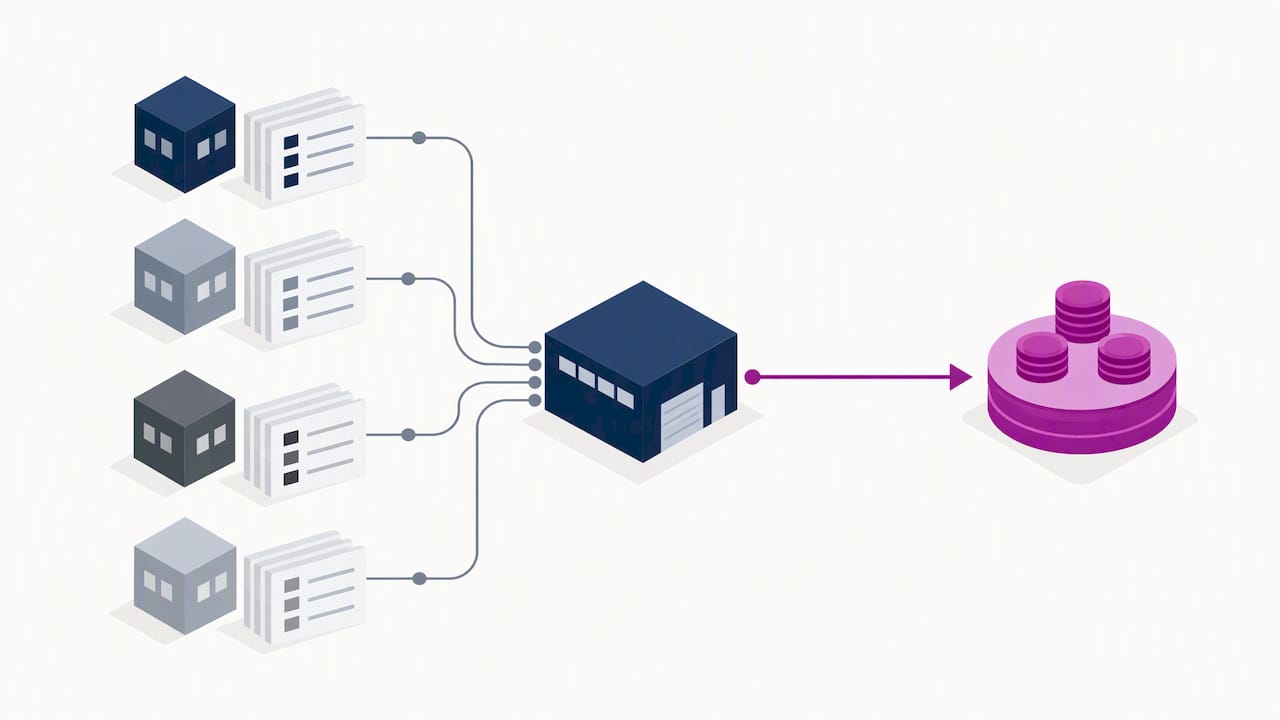
- One login, not six. If a partner has to remember a separate portal for assets, another for funds and another for ordering collateral, adoption falls.
- Search that works. A partner should find the right asset in under a minute, in the right language and format.
- Ready to run. Campaigns in a box, with copy, creative, targeting suggestions and a calendar, beat a library of loose files.
- Ordering built in. Printed collateral, signage and promotional items should be orderable where the campaign lives, with approvals and payment handled in the same flow. Our B2B marketplace covers that for channel partners.
Work through an actual distributor’s week before you design anything. Where would they see the campaign? What would they do next? Remove every step you can.
Orchestrate partners instead of managing a list
As programs grow, the spreadsheet stops working. Forrester’s Jay McBain has put it bluntly: “ecosystems don’t run on spreadsheets”. The same post names common blockers: partners not sharing customer and market data, no repeatable way to clean and combine that data, and thin analytical skills inside the brand.
For a distributor program, that translates into a short list of habits:
- Keep one record per partner: tier, funds, campaigns, orders, assets used.
- Agree up front what data partners share, and what they get back in return, such as benchmarks or local lead reports.
- Review results by partner and by campaign type every quarter, not once a year.
- Use a shared calendar so partner promotions do not collide with national campaigns.
Our pieces on partner channel management and building a collaborative partner ecosystem go further on structure. If your teams are still running campaigns by email, through-channel marketing automation is the shift to examine first.
A distributor marketing program in six steps
Here is the order we would work in for a brand starting or rebuilding a program.
- Audit what exists. List every distributor, the marketing each one runs, the assets in circulation and the funds spent last year. Expect gaps and duplicates.
- Segment and set tiers. Use volume, capacity and role. Define benefits and obligations per tier.
- Centralize assets and approvals. Put brand assets, templates and approval rules in one place before you ask partners to use them.
- Design the funding model. Decide accrual rates, eligible activities, claim steps and expiry. Make balances visible at ordering.
- Launch with a few partners. Pick three to five from different tiers. Watch where they stall, then fix the process.
- Measure and reallocate. Track participation, spend used, campaigns run and sales lift by partner. Move budget toward what works.
The temptation is to start with campaigns. Resist it. Campaigns launched into a messy foundation produce inconsistent results you cannot interpret.
What to measure
Pick a small set of measures and report them the same way every quarter.
- Participation rate: the share of partners running at least one program activity.
- Fund utilization: dollars claimed against dollars accrued, by partner and tier.
- Time to launch: days from campaign release to partner go-live.
- Brand compliance: the share of partner-created materials approved first time.
- Sales influence: orders and revenue from partners before and after program changes, with caution about attributing sales to marketing alone.
Utilization and time to launch are the early signals. If they are weak, sales results will not follow.
Our perspective
We have spent more than 20 years building marketing programs for brands that sell through other people, including dealers, distributors, franchisees, agents and advisors. The pattern we see most often is not a lack of ideas. It is fragmentation. Assets live in one system, funds in another, orders in a third, and nobody at corporate can see the whole picture.
So we build around one principle: corporate keeps control of the brand and the budget, and every local partner gets what they need to market and sell without friction. Those goals are usually framed as a trade-off. They are not. When partners can launch a compliant campaign in minutes, they stop going around the rules.
Our advice to a marketing leader starting out is to fix the plumbing before the creative. Get assets, approvals, funds and ordering behind one login. Then run campaigns. The results from that foundation are easier to read, and partners learn to trust the program.
— Client
Where GearBox fits
GearBox® is our marketing logistics platform for brands that sell through partners. It puts campaigns, vendors, co-op funds, orders and brand assets behind one login. Modules cover asset management (with Adobe DAM and Widen integration), Converge® for global-to-local marketing, co-op and MDF management including the Reverse Co-op Engagement Tool for distributors, approvals, payments and sales tax, campaign calendars and analytics. It supports multilingual and multicurrency programs.
For example, SRS Distribution adds more than $2 million a year in co-op fund use across 70+ vendors, and Steelcase runs 15,000+ users in 9 countries on the platform. If you are planning or rebuilding a distributor program, you can schedule a GearBox demo and walk through your own channel with our team. Manufacturers can also see how GearBox supports manufacturing operations.
FAQ
What is a distributor marketing strategy?
It is the plan a brand uses to market and sell through distributors it does not own. It covers partner segmentation, the assets and campaigns you provide, how local marketing is funded, and how you measure results. The aim is consistent brand presentation and real partner participation.
How is it different from a distribution strategy?
A distribution strategy decides how your product reaches the market: direct or indirect, intensive, selective or exclusive. A distributor marketing strategy starts after that choice. It decides how you promote and support the product through the distributors you selected.
How do you get distributors to promote your brand?
Make it easy and make it pay. Offer ready-to-run campaigns, show co-op balances at the point of ordering, shorten claims, and report back on what their activity produced. Partners spend effort where the effort is lowest and the return is clearest.
How should co-op funds be structured for distributors?
Accrue funds on purchases, define eligible activities in advance, keep claims to a few steps and set clear expiry dates. Tiered rates reward higher-volume partners. Track utilization by partner so you can see which funds are going unused and why.
Sources
- McKinsey: five fundamental truths of how B2B winners keep growing (B2B Pulse 2024)
- Forrester: What I See Coming For The Channel In 2020
- Forrester: Measure What Matters, partner ecosystems and measurement
- McKinsey: Reinventing the digital customer experience
