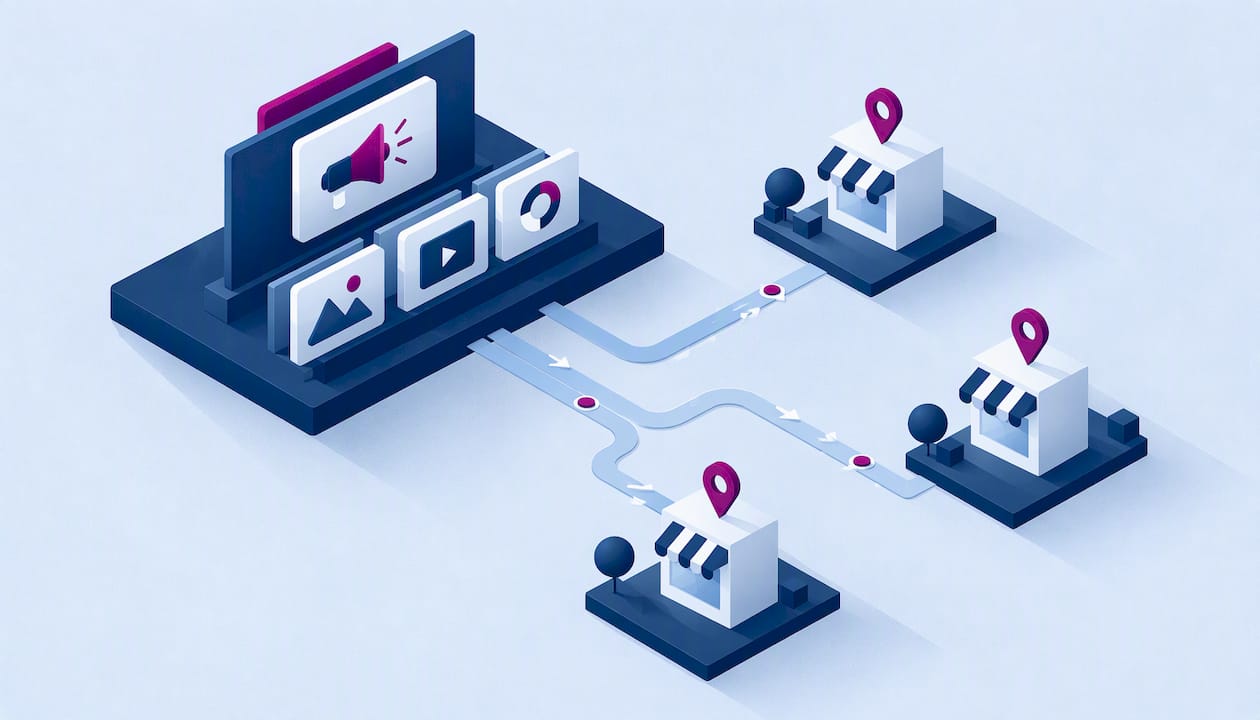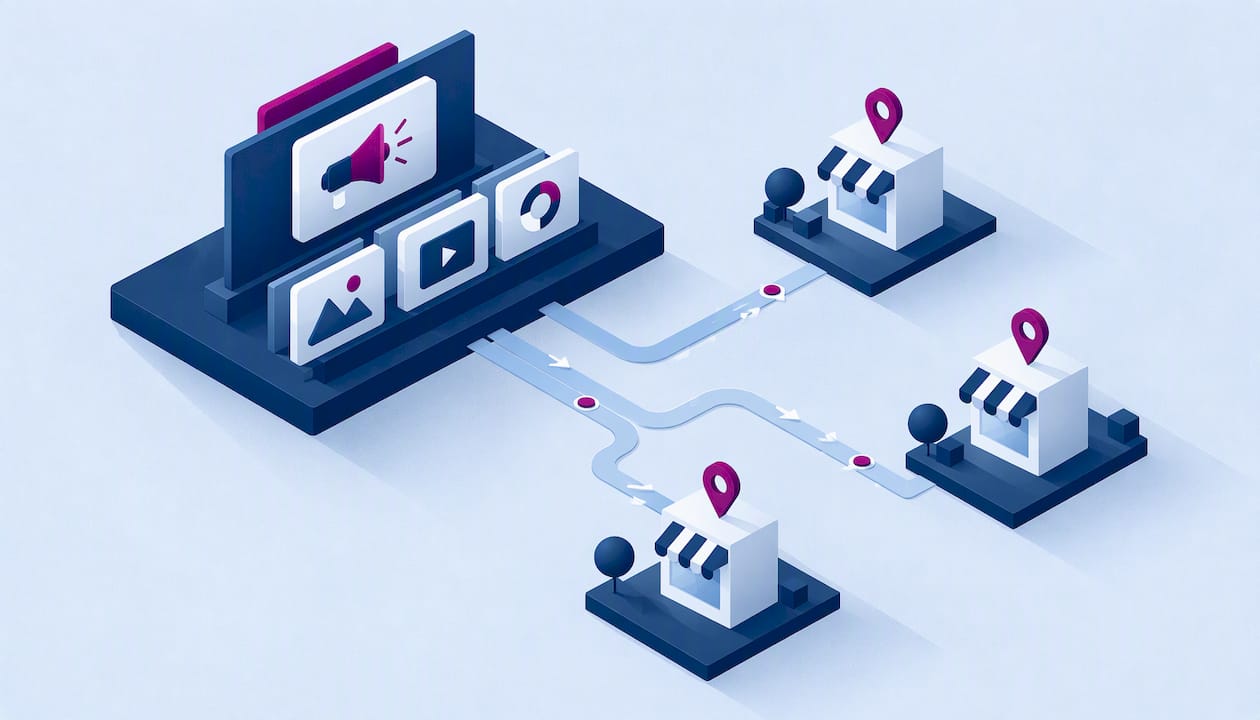


Campaign orchestration is the coordination of every moving part of a campaign: timing, messaging, channels, audiences, budgets and approvals. The goal is for them to work as one effort instead of a pile of separate tasks. Most guides cover this for a single brand sending emails and ads. This one also covers the harder case, where corporate sets the strategy and hundreds of dealers, franchisees, distributors or agents run the campaign locally.
Irisnow
Coordinate Campaigns Across Partners
GearBox brings campaigns, vendors, co-op funds, orders and brand assets together for brands marketing through dealers, distributors and other partners.
TL;DR
Table of Contents
What campaign orchestration means
One glossary definition describes it as coordinating timing, messaging, channels, audience segments and triggers so they work as a single, synchronized effort. That is a good working definition. Three points make it concrete:
You will also see the same idea called marketing orchestration or cross-channel orchestration. Marketing orchestration is the broader term: it covers the whole system of campaigns, budgets and data. Cross-channel orchestration is the narrower question of making email, paid media, direct mail, in-store and web messages line up for one audience. Campaign orchestration sits between the two: one campaign, many channels, many hands.
Orchestration is not the same as automation
A common misconception is that orchestration is simply more automation. Contentful’s practitioner guide frames it differently: orchestration is the strategic intelligence that governs automation. It depends on a solid foundation of data governance, consent management and clear if-then logic. The same source warns that AI cannot repair a weak foundation; it only spreads disconnected experiences faster.
In practice the difference looks like this:
AutomationOrchestrationQuestion it answersHow do we send this faster?Should we send it, to whom, when, and who approves it?ScopeA task or a single channelA campaign across channels, teams and budgetsNeedsA template and a triggerRules, data, ownership, sequencing, measurementFailure modeErrors at speedGaps between teams, duplicated spend, off-brand output
The orchestration layer holds the rules: suppression (do not message someone who just bought), frequency caps, next-best-action logic and escalation when something needs human review. Compliance belongs inside those rules from day one. Contentful notes that governance, including GDPR and CCPA compliance, should be embedded in the engine rather than added afterward.
The building blocks of a well-orchestrated campaign
A single plan and calendar
Everyone, including partners, should see what is running, when and why. Without a shared calendar, two teams hit the same audience in the same week with different offers. This is the cheapest fix and the one most often skipped.
Governed content
Approved logos, offers, disclaimers and creative must be easy to find and hard to get wrong. In regulated categories such as insurance and finance, or in franchise systems with legal requirements, this means templates with locked and editable fields rather than free-form files by email.
Decision rules
Who gets which version? What happens when a partner has no budget left? What triggers a follow-up? Write the rules down before you configure anything.
Budget and fund control
Campaigns cost money, and in indirect channels much of that money sits in partner-level programs such as co-op and market development funds (MDF). If fund balances live in spreadsheets and the campaign lives in another tool, nobody can say what a campaign actually returned.
Measurement
Click-through rates tell you little about whether orchestration added value. Research on orchestration decisioning points toward measurement frameworks that evaluate incremental conversions and profit instead of surface metrics, so orchestration adds value instead of noise. For a channel brand, add fund utilization, partner participation and time from request to launch.
Why orchestrating through partners is harder
A brand marketing to consumers directly controls the whole chain. A brand selling through dealers, franchisees, distributors, agents or advisors does not. Corporate owns the brand and the national budget. Partners own the local relationship, the local budget and the local knowledge. Five problems follow:
The usual answer to uneven capability is to package the work. A Sherpa Group partner marketing catalogue states that packaged, pre-defined campaigns can lift marketing ROI by 25 to 35 percent through data-driven optimization and reduced waste. Treat that as a vendor-published estimate, not a guarantee. The underlying logic is sound, though: pre-built campaigns let a marketing-light partner participate at the level of a sophisticated one.
Account-based programs follow a similar pattern. One agency’s explanation of ABM orchestration shows how contact signals can be turned into coordinated sales and marketing actions, which is the same discipline applied to named accounts instead of local markets.
A practical framework: from corporate plan to local launch
This sequence works whether you use a platform or a well-run set of tools. Each step names the decision it forces.
An example of the scale involved
Systems like this are common in franchise restaurants and building products. Our work with Applebee’s automated menus across nearly 2,000 locations, a case where one corporate change has to reach every local location correctly and on time. Another is a fitness franchisor running local marketing across its system. Different industries, same problem: consistent message, local execution.
Where orchestration breaks down
Six failure patterns come up repeatedly:
Our perspective
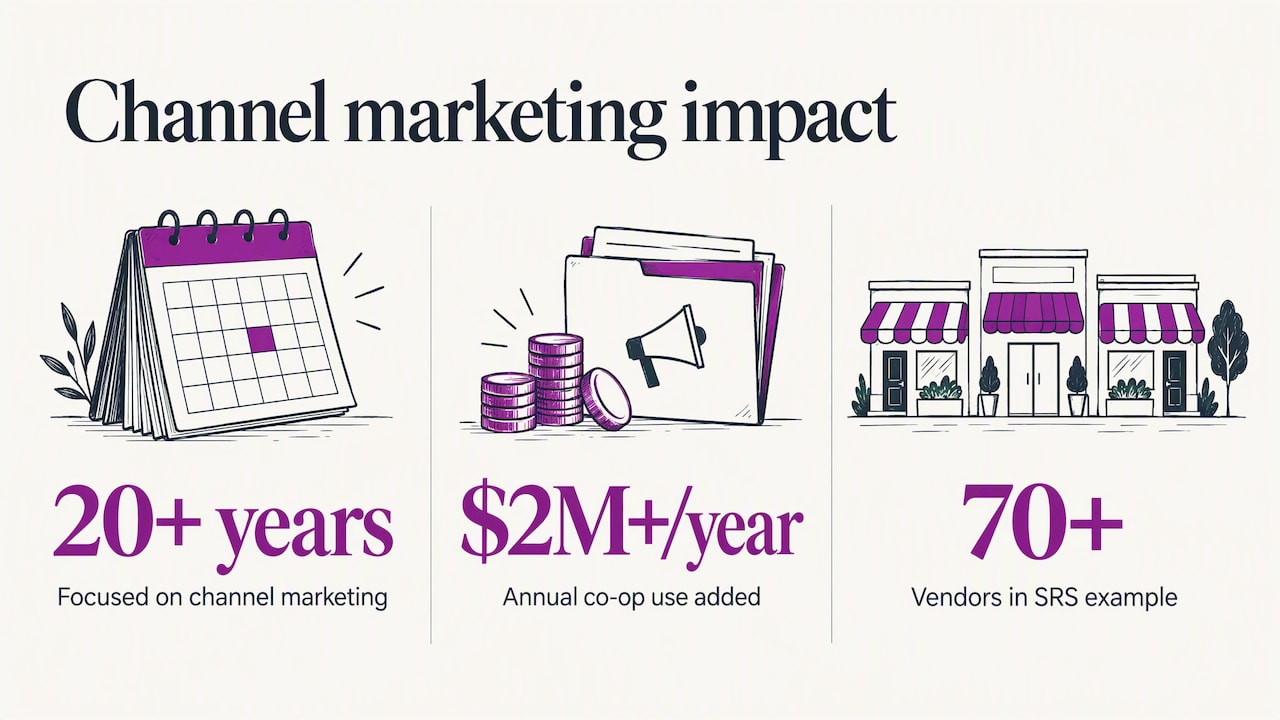
We have spent more than 20 years on one problem: helping brands that sell and market through other people. Our view is that most orchestration advice stops at the edge of the brand’s own channels, which is exactly where indirect-channel marketing gets difficult.
We think orchestration for these brands is a logistics problem as much as a messaging problem. A campaign succeeds when the right asset, the right approved vendor, the right fund balance and the right approver all line up for a local partner at the moment that partner is ready to act. That is why GearBox® puts campaigns, vendors, co-op dollars, orders and brand assets behind one login. Corporate keeps control of the brand and the budget. Local partners get what they need to market and sell without a ticket queue.
Our advice to marketing leaders: fix the rules before the technology, make participation easier than avoidance, and measure fund use as carefully as you measure leads. When a distributor can see unused vendor funds and act on them, the numbers move. SRS Distribution, for instance, added more than $2 million a year in co-op fund use across 70+ vendors.
What to look for in an orchestration platform for partner marketing
Whatever you evaluate, test these criteria against your own process, not a demo script.
CriterionWhat good looks likeAsset managementConnects to the DAM you already use, with templates that lock brand elementsGlobal-to-localPartners customize within limits; corporate sees every variationFundsCo-op and MDF balances, claims and approvals visible in the campaign flowVendorsProcurement not tied to a single vendor; pricing and orders trackedApprovalsTiered, time-boxed, auditablePayments and taxSales tax and payments handled in the workflowScaleMultilingual and multicurrency support if you operate beyond one countryAnalyticsResults by partner, region and campaign, tied to spend
If you want to see how adjacent disciplines connect, these pages cover cross-channel campaign management, channel marketing automation, and where a marketing logistics platform fits next to a CRM or marketing automation tool. For funding mechanics, see our guide to co-op fund management, and for the vendor side, our vendor management guide.
How GearBox® supports campaign orchestration across your channel
GearBox® is our marketing logistics platform for brands that go to market through dealers, distributors, franchisees, agents and advisors. It is modular, so you can start where the pain is worst: asset management (with Adobe DAM and Widen integration), Converge® for global-to-local marketing, co-op and MDF fund management, vendor-agnostic procurement, a B2B marketplace, order tracking, approval hierarchies, payments and sales tax, campaign calendars, analytics and collateral fulfillment.
If your campaigns stall between corporate and the field, schedule a demo of GearBox® and bring a real campaign to walk through.
FAQ
What is the difference between campaign orchestration and marketing orchestration?
Campaign orchestration coordinates the steps, channels, audiences and timing of a specific campaign. Marketing orchestration is the wider practice of aligning all campaigns, data, budgets and teams. Think of campaign orchestration as one piece of the larger system.
Is campaign orchestration just marketing automation?
No. Automation executes a task, such as sending an email at a set time. Orchestration decides which tasks happen, in what order, for whom, under which rules and approvals. Automation without orchestration tends to produce fast but disconnected activity.
How do you orchestrate campaigns across dealers or franchisees?
Start with a locked-and-local template: corporate fixes the brand and offer, and partners edit local details. Add tiered approvals, tie each campaign to the partner’s co-op or MDF balance, and route print and media orders through approved vendors. Then track participation and results by partner.
What should I measure?
Measure incremental outcomes, not only clicks: conversions that would not have happened otherwise, plus cost per result. In channel marketing, also track partner participation, fund utilization and time from campaign release to local launch.